

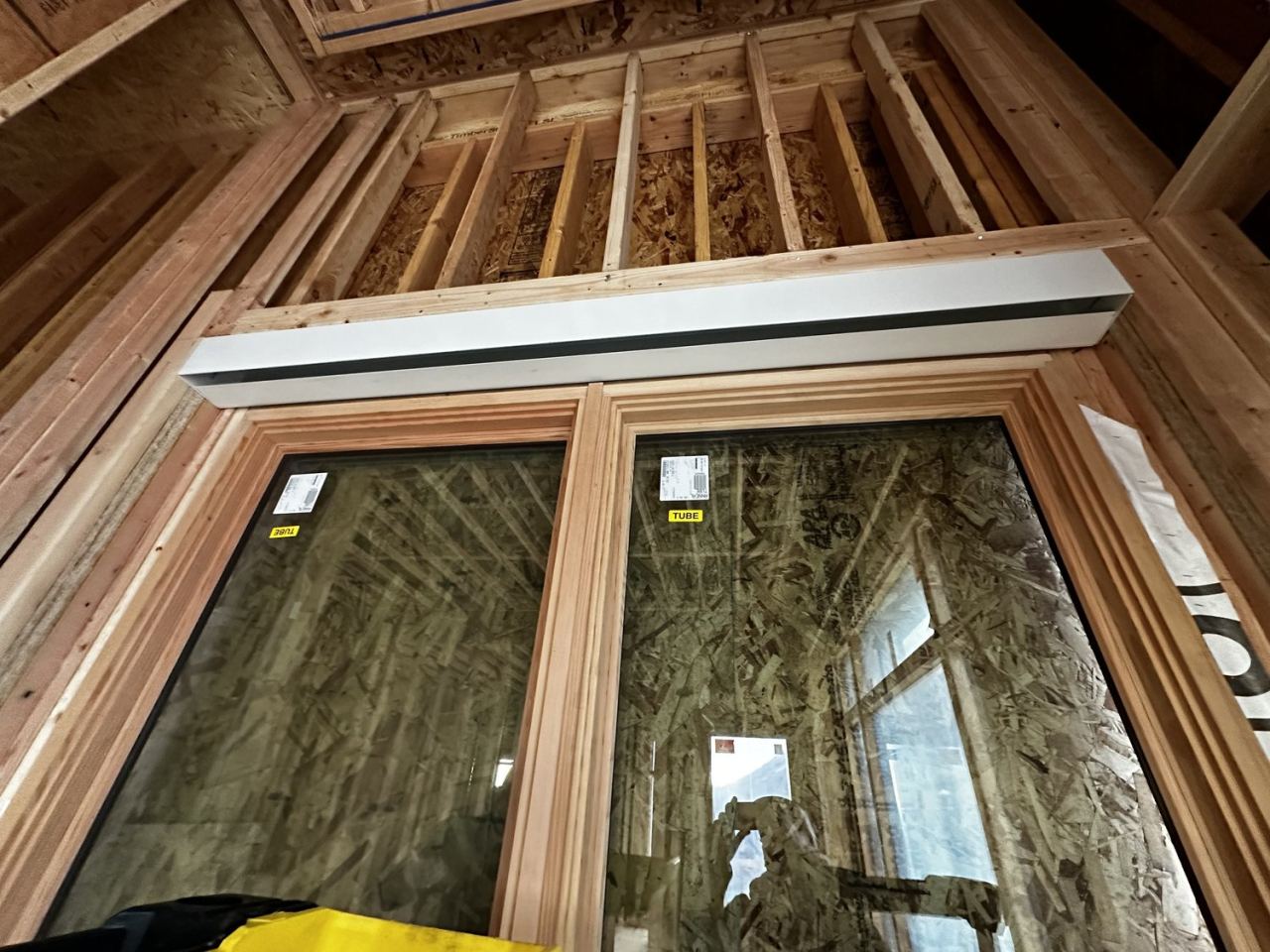
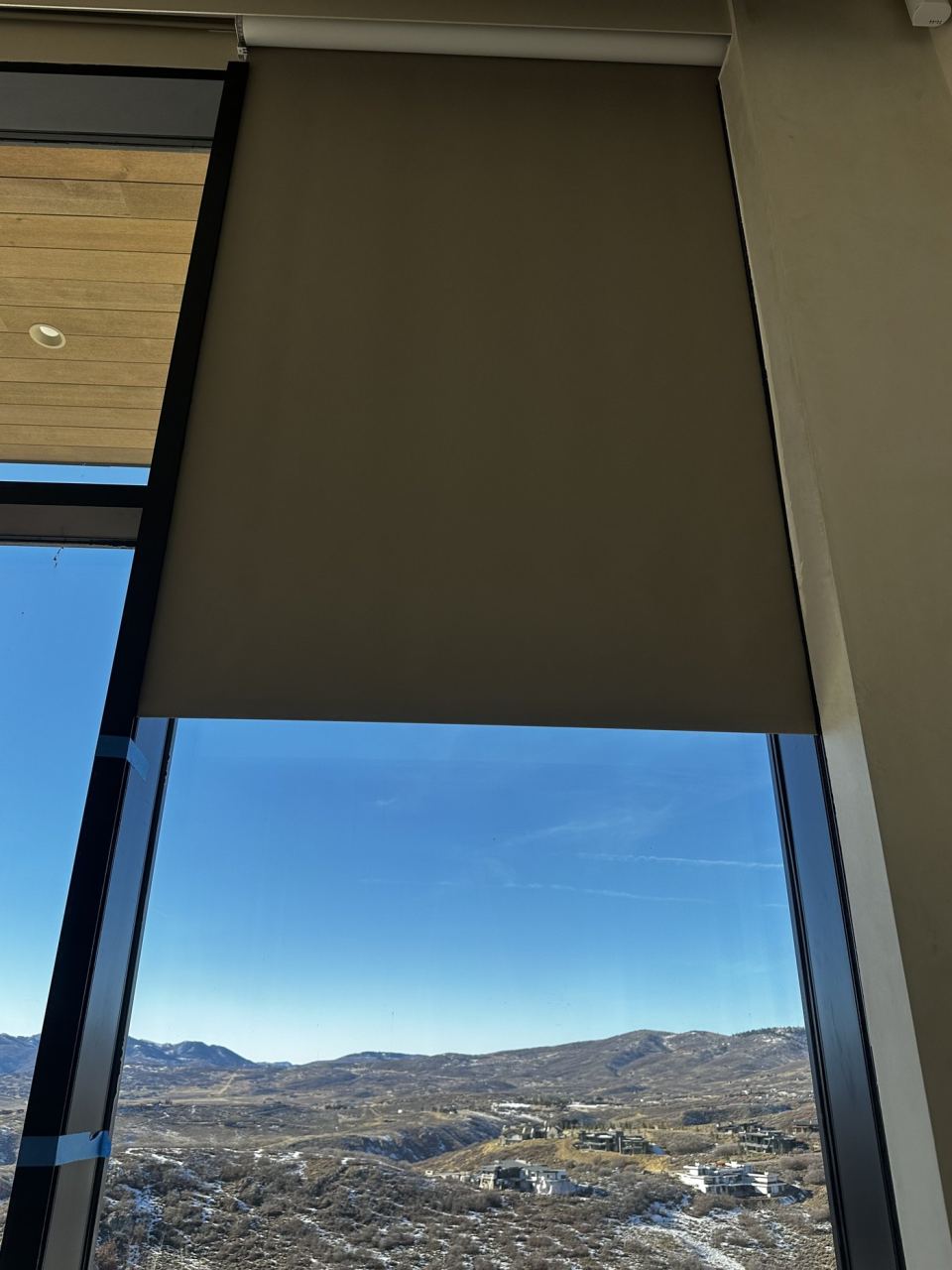
On most luxury builds, shades are chosen near the end of the project. By then the ceilings are closed, the window heads are finished, and the only place left for a shade is a visible box or fascia hanging in front of the glass. Planning the pocket during framing avoids all of that. The roller lives inside the ceiling, the reveal is a clean slot, and the fabric disappears when it is up.
What a shade pocket is
A shade pocket is a recess built into the ceiling or header above a window that houses the motorized roller. When the shade is raised, nothing shows except a narrow slot in the ceiling. Lutron makes factory aluminum pockets for its Palladiom and Sivoia QS shades, and a recessed pocket for motorized drapery track.
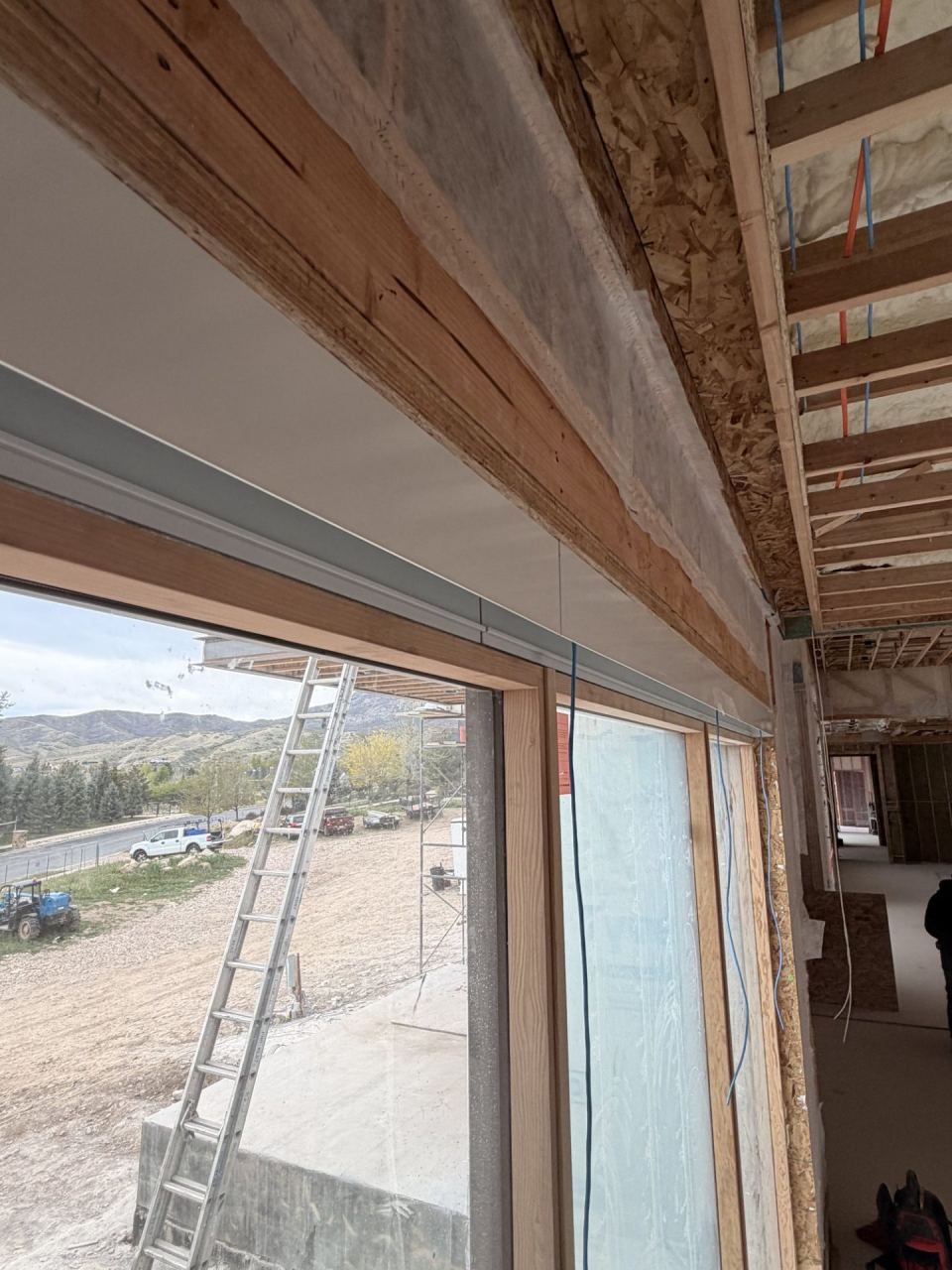
Five things to decide while the walls are open
1. Which openings get shades
Walk the plans room by room. Bedrooms usually need blackout; great rooms and offices usually need glare control that keeps the view. Decide early so every opening that needs a pocket gets one.
2. Pocket size and the rough opening
The pocket has to fit the roller, the fabric roll at full height, and any second shade if you are pairing sheer and blackout. Your integrator supplies the dimensions and the builder frames the opening to that spec. This is the step that is nearly impossible to fix later.
3. Power and control wiring
Every motor needs power and a control path. Plan a low-voltage or line-voltage drop at each pocket, a home run to the shade power panel, and keypad locations at the doors where people will actually reach for them.
4. Blackout details
Light leaks at the sides and between shades are what ruin a bedroom. Side channels close the edges. On very wide window walls where shades meet in the middle, a center channel may be needed. On one project we designed a custom powder-coated aluminum center channel because no off-the-shelf part existed.
5. Who owns each step
Pockets touch four trades: framing, electrical, drywall and finish carpentry. Agree in writing who frames the opening, who sets the pocket, and who finishes the reveal. Most problems we are called to fix come from a step nobody owned.
Fabric comes later
The pocket decision is about space and wiring. Fabric — openness, color, weave — can be chosen months later with your designer, and it is easy to see fabrics in person at the Cast showroom in Heber City.
If you are framing now, send us your plans and we will mark up every opening with pocket sizes and wiring before your next framing walk.